
Treatments of Dry Eyes
Intense Pulsed Light
Suffering from Dry Eyes? Intense Pulsed Light treatment works with up to 80% of dry eye cases!
There is a now a treatment available which treats MGD (Meibomian Gland Dysfunction), improving tear quality and other symptoms reported by patients.
IPL (Intense Pulse Light) treatment combined with LLLT (low level light therapy) is a pain-free and effective way to treat dry eye conditions related to MGD.
Effect of treatment:
Most patients have commented that they have an improvement of the condition in only a few hours after the first treatment.
Depending on the severity of the condition, usually three to four treatments are required at intervals of 2-3 weeks. Further treatments will not be required for 6-12months.
MGD occurs when the meibomian glands do not function normally. The meibomian glands in the eyelids produce oil that forms part of the tear film. The oily layer prevents the tears from evaporating and lubricates the surface like oil in a car engine. Patients with MGD often have abnormally dilated blood vessels (telangiectasia) along the eyelid margins. These dilated vessels are a source of increased inflammation.
IPL causes photocoagulation and closes these abnormal blood vessels. IPL also is thought to stimulates the cells. IPL and LLLT treatment also opens up the meibomian glands and liquifies the oil within the glands.
Low Level Light Therapy
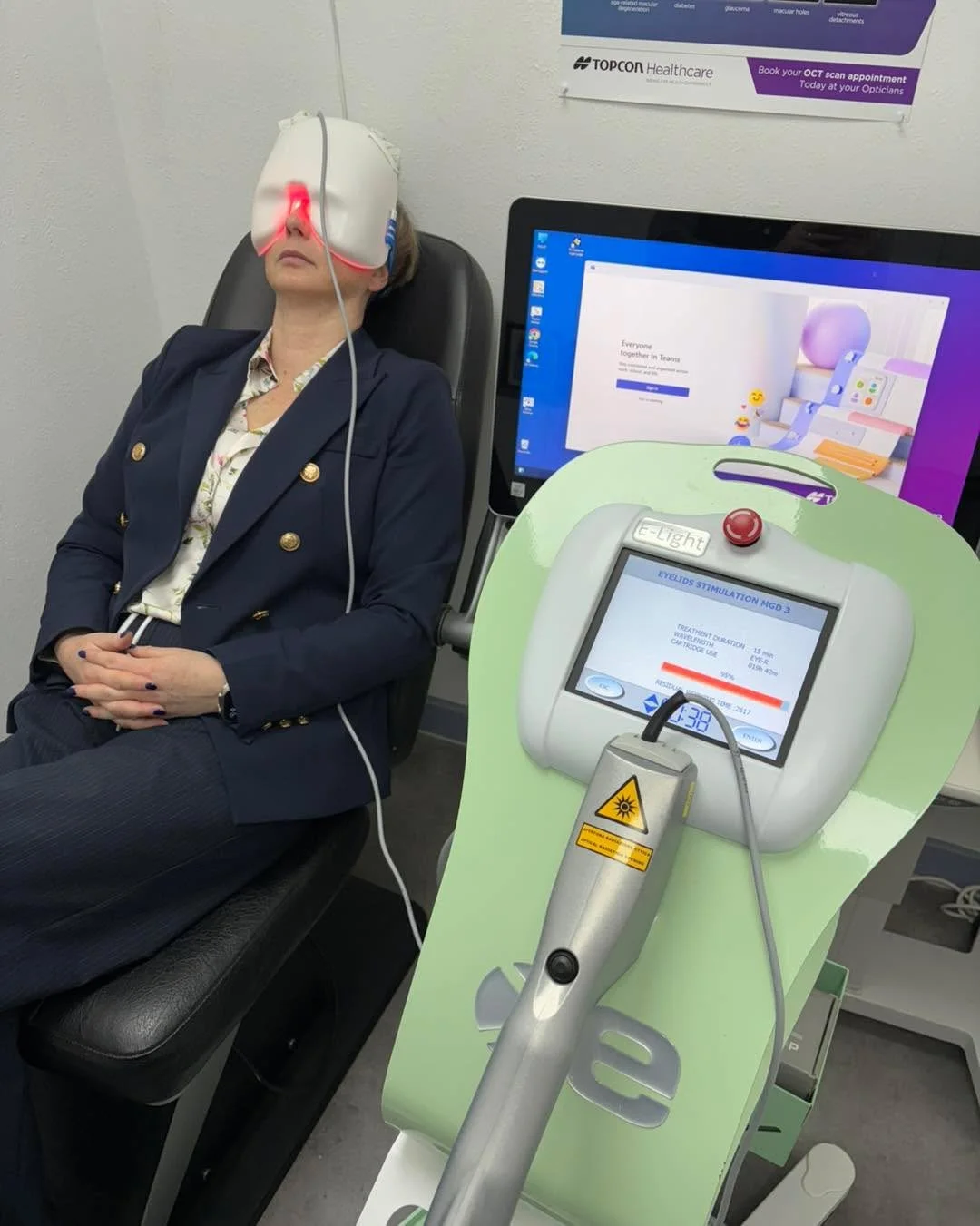
LLLT uses specially designed LED lights to gently warm up the eyelids, causing the meibomian glands to unclog and release oils needed to keep eyes healthy, moisturised and comfortable.
Low Level Light Therapy is a powerful and unique treatment that is non-invasive, pain and stress-free.
Red LLLT can be used to treat Meibomian Gland and Dry Eye as well as treat styes and chalazion (cysts) of the eyelids.
It’s quick and painless! Simply lay back with the mask on and relax as the warm light clears your glands.
Blue LLLT:
Blue light energy is absorbed by molecules called porphyrins within bacteria and photosensitization occurs
Exposure to the light can result in photodynamic inactivation – a process in which bacteria are killed by light
On blue light illumination, the membrane-bound porphyrin molecules generate singlet oxygen radicals that damage or disrupt the cell wall of a variety of gram-positive bacteria and lead to cell death
The relatively weak defence mechanism in bacteria against singlet oxygen-induced damage contributes to the high efficiency of the photodynamic inactivation.
This means that we are able to treat the bacteria and micro organisma that grow on the skin area around the eye and are a cause of Dry Eye.
Most patients benefit from a combination of Blue and RED LLLT.
Indiviual session of Red OR Blue light LLLT only £75 or 3 sessions £205.
Amniotic Membrane
The Biological Bandage
What is an Amniotic Membrane?
The amniotic membrane is the innermost layer of the placenta, which is typically discarded after childbirth. However, this membrane has special properties that make it useful in medicine, especially for treating eye conditions. When used in eye care, the membrane can help protect and heal damaged areas, reduce inflammation, and support the regeneration of tissues.
How is the amniotic membrane prepared?
Before it can be used in medical treatments, the amniotic membrane is carefully collected from consenting mothers who have undergone planned caesarean sections. The tissue is then thoroughly cleaned and preserved using different methods to ensure it remains safe and effective for medical use.
More effective patient care
1. Eliminate:
Removes the need of costly surgery
2. Simplicity:
Easy 4-6 minute procedure
3. Prevents:
Limits inflammation-mediated damage
4. Recovery:
Facilitates ocular healing
OmniLenz® is a bandage contact lens designed to apply Omnigen® to the ocular surface in a 4-6 minute procedure in an outpatient setting.
How do we use the amniotic membrane for your eye care?
At Jones Eyecare we primarily offer an amniotic membrane for the treatment of dry eye disease, where the membrane can be used as a temporary cover to protect the eye while it heals. The membrane is held in place by a soft contact lens. This is usually for one week. The membrane can provide relief and help restore the eye’s surface within this time. The temporary membrane acts as a biological dressing to protect the eye and provides a supportive environment to facilitate natural healing and recovery. We also can use this treatment for patient who have recurrent corneal erosions which are not healing with traditional treatments.
Amniotic Membrane costs £600, this includes the 2 appiontments needed for insertion and removal.